
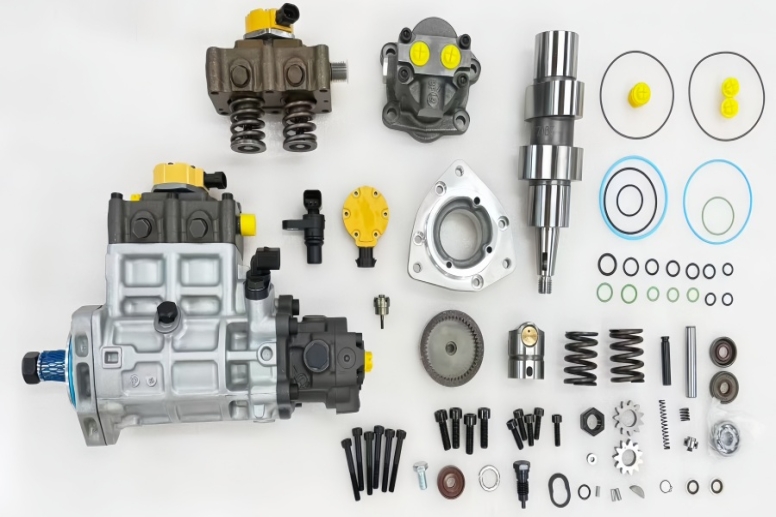
Internal structure and daily preventive maintenance suggestions for engine diesel pumps
Understanding the internal structure and adhering to a strict preventive maintenance schedule for an engine-driven diesel pump is critical for reliability, especially in emergency applications like fire fighting, irrigation, or industrial backup.
Here is a comprehensive breakdown of the internal structure and a practical guide for daily preventive maintenance.
Part 1: Internal Structure (Major Components)
An engine diesel pump is essentially two machines combined: a Diesel Engine (provides power) and a Pump End (moves water). They are connected via a flexible coupling or a shaft.
A. The Diesel Engine
Cylinder Block & Head: The robust body containing the cylinders where combustion happens. The head houses valves and injectors.
Fuel System:
Fuel Tank: Stores diesel.
Fuel Lift Pump: Transfers fuel from the tank to the injection pump.
Fuel Injection Pump: Meters and pressurizes fuel, sending it to injectors at the correct time.
Injectors: Spray atomized fuel into the cylinders.
Fuel Filters: Primary and secondary filters to remove water and contaminants.
Air Intake System:
Air Cleaner: Filters dust from intake air (critical in dusty environments).
Turbocharger (if equipped): Uses exhaust gases to force more air into cylinders for greater power.
Lubrication System:
Oil Pump: Circulates oil under pressure.
Oil Filter: Removes contaminants from the oil.
Oil Pan (Sump): Reservoir for engine oil.
Cooling System:
Radiator (for radiator-cooled engines): Cools the coolant using air flow from a fan.
Heat Exchanger (for keel-cooled or marine engines): Uses raw water to cool the engine coolant.
Coolant Pump: Circulates coolant through the engine.
Exhaust System: Manifold, turbocharger (if fitted), silencer, and piping to vent gases safely.
Electrical/Starting System:
Starter Motor: Cranks the engine.
Battery: Provides electrical power.
Alternator: Charges the battery while the engine runs.
Control Panel: Gauges (oil pressure, temp, RPM) and safety shut-downs.
B. The Pump End (Usually a Centrifugal Pump)
Pump Housing (Volute): The spiral-shaped casing that converts velocity into pressure.
Impeller: The rotating vaned wheel inside the housing that accelerates the water.
Shaft and Bearings: Transfers rotational force from the engine to the impeller and supports the rotating assembly.
Mechanical Seal or Gland Packing: Prevents water from leaking out along the shaft where it exits the pump housing. Mechanical seals are most common in modern units.
Wear Rings: Replaceable rings inside the housing and on the impeller that maintain a tight clearance to prevent water from recirculating internally (reducing efficiency).
Priming System (for self-priming pumps): A built-in mechanism (like a recirculation venturi or a vacuum pump) that removes air from the suction line to start the water flow.
Part 2: Daily Preventive Maintenance Suggestions
Consistency is key. Use a logbook to record all checks, findings, and actions. The goal is to find small problems before they become big failures.
A. Pre-Start Checks (Every Day/Before Use)
Visual Inspection (Walk-Around):
Check for any signs of fuel, oil, or coolant leaks on the ground or on the equipment.
Inspect hoses and belts for cracks, fraying, or looseness.
Ensure the air cleaner indicator (if fitted) isn't showing a restriction.
Verify the pump suction strainer (foot valve) is clean and not blocked by debris.
Fluid Level Checks:
Engine Oil: Check the dipstick. Ensure oil is at the "Full" mark and looks clean (not milky or gritty).
Coolant: Check the radiator or coolant reservoir level. Never open a hot radiator cap.
Fuel: Ensure the fuel tank is full. If the pump is for emergency use, keep it topped off to prevent condensation in the tank.
Battery: Check electrolyte level (if it is a serviceable battery) and ensure terminals are clean and tight.
Pump Priming:
This is critical. Open the priming vent or air release valve on the pump casing. If water flows out, the pump is primed. If only air comes out, you must fill the pump housing and suction line with water before starting. Never run a centrifugal pump dry, even for a few seconds—it will destroy the mechanical seal.
Control Panel Check:
Turn the key to the "On" position (without starting) and verify the warning lights (battery charge, oil pressure) are functional.
B. Operational Checks (During Startup and Run)
Start the Engine:
Observe the starting behavior. Does it crank strongly or sound sluggish?
Listen for any unusual noises: knocking, screeching (belts), or grinding.
Check Gauges Immediately:
Oil Pressure: Must rise to the normal range within seconds. If not, shut down immediately.
Coolant Temperature: Should rise steadily and stabilize.
Check for Discharge:
Once the engine is running, slowly open the discharge valve (if applicable).
Check the pressure gauge. Does it match the expected performance for the application?
Look at the discharge flow. Is it steady and strong, or is it sputtering (indicating air in the line)?
Listen to the Pump:
A properly operating centrifugal pump makes a steady, smooth sound.
Cavitation: A sound like gravel or marbles rattling inside the pump indicates cavitation (low suction head). This causes severe damage and must be corrected immediately (throttle back or check suction lift).
C. Post-Operation Checks (After Shutdown)
Allow Engine to Cool Down: If the pump has been under heavy load, let it idle for 3–5 minutes before shutting down to allow the turbocharger (if equipped) and engine to cool evenly.
Final Visual Inspection:
Look again for any new leaks that may have developed while hot.
Check for anything that may have been sucked into the pump strainer (plastic bags, weeds) and clean it off.
Refuel:
If the pump was used, refuel it immediately after shutdown. This prevents condensation in the tank and ensures it is ready for the next emergency.
Summary of Daily Maintenance Schedule
| System | Check/Action | Frequency |
|---|---|---|
| Engine Oil | Check level with dipstick | Daily |
| Coolant | Check level in reservoir/radiator | Daily |
| Fuel | Check level; top off after use | Daily |
| Air Cleaner | Check indicator; visual for dust | Daily |
| Pump | Ensure primed before starting | Every Start |
| Leaks | Visual for fuel, oil, water | Daily |
| Gauges | Monitor during operation | Every Run |
| Logbook | Record hours, fuel added, notes | Daily |