
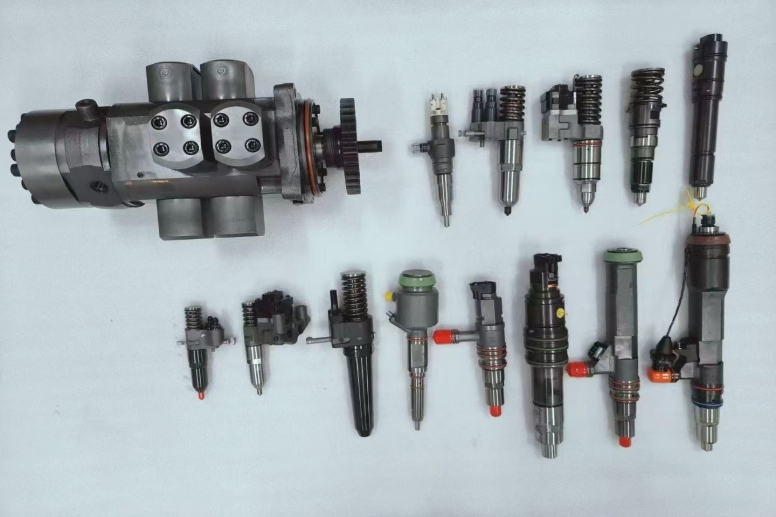
What characteristics should high-quality fuel injectors have?
High-quality fuel injectors are precision components that must deliver the exact amount of fuel, in the correct pattern, every single time, while withstanding harsh operating conditions for hundreds of thousands of miles. Their characteristics can be grouped into three critical areas: precision and performance, durability and compatibility, and seamless integration.
Here is a detailed breakdown of the characteristics that set high-quality fuel injectors apart.
Precision & Performance: The Core of Engine Tuning
The primary job of an injector is to meter fuel with extreme accuracy. High-quality injectors excel in this area through several key features:
Exceptional Flow Consistency and Matching: For an engine to run smoothly and efficiently, each cylinder must receive the same amount of fuel. High-quality injectors are "flow-matched," meaning they are tested and sorted to ensure their flow rates are nearly identical. This cylinder-to-cylinder balance is critical for optimal power, smooth idle, and reduced emissions . Industry standards like SAE J1832 provide detailed test procedures for measuring flow curves and consistency to ensure this uniformity .
Superior Fuel Atomization: An injector's job is to turn liquid fuel into a fine mist. Better atomization means the fuel has a larger surface area, allowing it to mix more thoroughly with air for a more complete and powerful combustion. This leads to faster throttle response and helps prevent raw fuel from washing down cylinder walls . Advanced injector designs, such as those with machined disc-type control valves, are specifically engineered to improve spray patterns and atomization .
Linear Flow at Low Pulse Widths: A hallmark of a quality injector is its ability to maintain precise control over fuel delivery even when the engine is at idle or light cruise, where the "pulse width" (the time the injector is open) is very short. Consistent, linear flow across the entire operating range ensures drivability and smooth transitions from idle to full throttle .
🛠️ Durability & Compatibility: Built to Last
Fuel injectors live in a tough environment. They must resist corrosion, heat, vibration, and the chemical effects of modern and high-performance fuels.
Robust Material Construction: The materials used inside an injector determine its lifespan. High-quality injectors use corrosion-resistant materials like stainless steel for internal components to withstand the effects of ethanol, methanol, and other aggressive fuels . The external body should also resist corrosion from underhood contaminants .
Fuel Compatibility: If you plan to use fuels like E85, methanol, or even more exotic racing fuels like nitromethane, your injectors must be specifically designed to handle them. Quality injectors are explicitly tested and rated for use with these fuels to prevent internal damage and swelling of seals . The SAE J1832 standard even includes specific tests for fluid compatibility and corrosion susceptibility .
Resistance to Contaminants and Leaks: Injectors have tiny internal passages that can be easily clogged by debris. High-quality injectors feature fine-mesh filter screens at the inlet to keep contaminants out . Equally important are the external seals. High-grade Viton® fluoroelastomer O-rings are a mark of quality, as they provide a superior seal against both fuel and vacuum leaks, even under extreme temperatures and pressure .
Withstanding the Environment: A quality injector is built to endure a brutal life of constant vibration, thermal cycling (extreme hot and cold), and torsional deflection. These factors are part of standardized durability tests defined by engineering standards like SAE J1832 to ensure a long service life .
Seamless Integration: The Importance of Design and Compatibility
A great injector also needs to work perfectly within your engine's management system and physical layout.
Correct Impedance (High vs. Low) : Injectors come in high-impedance (usually 8-16 ohms) and low-impedance (2-3 ohms) versions. High-impedance injectors are desirable for many modern performance applications because they can be driven directly by most engine control units (ECUs) without the need for additional, bulky peak-and-hold driver boxes. This simplifies wiring and installation .
Standardized Connectors: To ensure a reliable electrical connection and a hassle-free installation, look for injectors with industry-standard connectors. The USCAR (or EV6) connector is a common high-standard type, known for its ruggedness and water resistance. High-quality injectors feature terminals with superior materials, such as silver-plating, to ensure a solid, corrosion-resistant connection .
Availability of Technical Data: To tune an engine correctly, the person tuning it needs the injector's specific data. Reputable manufacturers provide comprehensive characterization data, including flow rates at various pressures and pulse widths. This data is essential for "hassle-free programming" of both stock and standalone ECUs .