
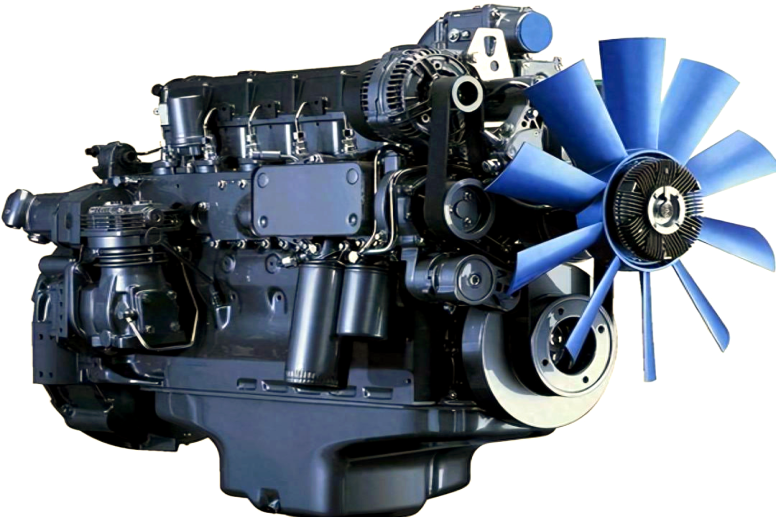
Let's explore the opportunities and challenges of diesel engines in today's booming new energy and energy storage markets
The role of diesel engines is undergoing a fundamental transformation in the era of new energy and energy storage. While their dominance in traditional sectors is being challenged, they are also finding new, more specialized niches. Here’s a breakdown of the opportunities and challenges.
Challenges: The Headwinds
Decarbonization and Regulatory Pressure: The global push for net-zero emissions is the single biggest challenge. Diesel engines, especially older models, are significant emitters of CO₂, NOx, and particulate matter. Stricter emissions standards (like Euro 7, EPA Tier 5) increase complexity and cost.
Direct Competition from Electrification:
Transportation: Battery Electric Vehicles (BEVs) are superior in passenger cars and are making inroads into short-haul trucking, buses, and delivery vans. The Total Cost of Ownership (TCO) is becoming favorable for fleets with predictable routes.
Stationary Power: For prime power, diesel gensets face competition from natural gas gensets (lower CO₂) and, more disruptively, from "Renewable + Battery Storage" microgrids.
Reputational & ESG Risks: "Diesel" is often associated with pollution and climate change. For companies with strong Environmental, Social, and Governance (ESG) goals, investing in diesel assets can be seen as a reputational liability.
Fuel Cost Volatility: Diesel fuel prices are subject to geopolitical and market fluctuations, making operational costs less predictable compared to fixed-cost electricity contracts for renewables.
Opportunities: The Evolving Niches
Paradoxically, the very growth of new energy creates new, critical roles for diesel technology, often in a transitional or hybrid capacity.
The Essential "Bridge" and Backup:
Grid Stability & Peak Shaving: As grids become more reliant on intermittent solar and wind, diesel gensets are being re-purposed as fast-responding grid assets. They can provide crucial inertia and frequency regulation during transitions.
Reliable Backup for Critical Infrastructure: Data centers, hospitals, and communication networks require 100.00% uptime. While batteries (UPS) handle instantaneous outages, diesel generators remain the gold standard for long-duration backup during grid blackouts or natural disasters. Their energy density is unmatched for this role.
Backup for Renewables: In hybrid renewable microgrids (solar+battery+diesel), the diesel genset acts as the final guarantee of power during prolonged low-renewable periods, allowing for smaller, more cost-effective battery installations.
Transitional Fuel Innovation:
Drop-in Biofuels & HVO: The existing fleet of diesel engines can significantly reduce its carbon footprint by using Hydrotreated Vegetable Oil (HVO) or advanced biodiesel. This is a near-term decarbonization path without engine modification.
E-Fuels (P2X): In the longer term, synthetic diesel (made from green hydrogen and captured CO₂) could provide a carbon-neutral fuel for hard-to-electrify applications, keeping engine technology relevant in a net-zero world.
Hybridization:
Diesel-Electric Hybrid Systems: Common in marine and locomotive applications, and growing in mining and construction. Here, the diesel engine runs at its most efficient constant speed to generate electricity, which drives electric motors, with batteries recapturing energy. This improves fuel efficiency and reduces emissions.
Range-Extended EVs: In large equipment or regional trucks, a small diesel generator can act as an efficient range extender, reducing the size and cost of the battery pack needed.
The "Hard-to-Electrify" Fortress:
Heavy-Duty & Off-Road: Mining trucks, large marine vessels (bulk carriers, container ships), heavy construction equipment, and long-haul trucking in remote areas face immense challenges with pure electrification due to energy density, weight, upfront cost, and charging infrastructure. Diesel (and its future fuel variants) will likely dominate here for decades.
Remote & Industrial Sites: For remote mining, oil/gas, and construction sites without grid access, diesel-powered microgrids are still the default. They are now increasingly integrated with solar/storage to cut fuel costs, but the diesel backbone remains essential.
Emerging Markets & Circular Economy:
Developing Nations: In regions with underdeveloped grids and less pressure for immediate decarbonization, affordable and reliable diesel power will remain crucial for economic development for the foreseeable future.
Service and Re-powering Markets: The massive existing installed base of diesel engines creates a long-tail market for service, parts, and even re-powering (replacing an old engine with a new, cleaner, more efficient one).
The Future Outlook: From Prime Mover to Specialist
The narrative is shifting. The diesel engine is no longer the undisputed prime mover but is becoming a specialized asset in a diversified energy ecosystem.
Future Role: Provider of Dispatchable, Dense, and Reliable Energy.
Key Strategy: Integration, not Isolation. The future of diesel is in hybrid systems, paired with renewables and batteries, and fueled by increasingly low-carbon fuels.
Innovation Focus: The R&D emphasis for engine manufacturers is now on maximizing efficiency, achieving near-zero emissions with after-treatment, and ensuring compatibility with sustainable fuels.
Conclusion:
The diesel engine faces existential threats in its traditional mass-market applications from electrification. However, it is simultaneously being reinforced in specific, critical roles enabled by the very instability that renewable energy introduces to the grid. Its future is not one of dominance, but of strategic partnership—serving as the reliable backbone, the essential backup, and the transitional workhorse in the complex journey towards a sustainable energy future. The companies that succeed will be those that pivot from selling "diesel engines" to selling "guaranteed power solutions" within integrated, low-carbon systems.