



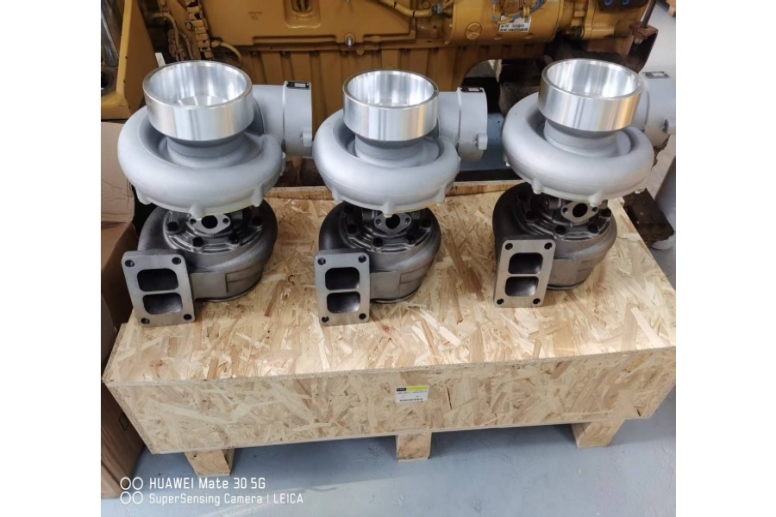
Maximizing Marine Power: The Ultimate Guide to the 49181-05400 Turbocharger Assy for Mitsubishi S16R2-MPTK Engine
Meta Description: Discover how the 49181-05400 turbocharger assy boosts performance, efficiency, and reliability in Mitsubishi S16R2-MPTK engines. Learn its working principle, key components, advantages, common faults, and maintenance tips.
Introduction
In the demanding world of marine propulsion and heavy-duty power generation, every component must deliver uncompromising reliability. The 49181-05400 turbocharger assy—specifically engineered for the Mitsubishi S16R2-MPTK engine—is a masterpiece of forced induction technology. Whether you operate a fishing vessel, a cargo ship, or a standby genset, this turbocharger ensures your Mitsubishi engine breathes efficiently, produces maximum horsepower, and withstands the harshest operating conditions.
This article dives deep into the inner workings, construction, benefits, potential pitfalls, and best-practice care for the 49181-05400 turbocharger. By the end, you’ll understand why this OEM-grade assembly is the gold standard for the S16R2-MPTK and how to extend its service life dramatically.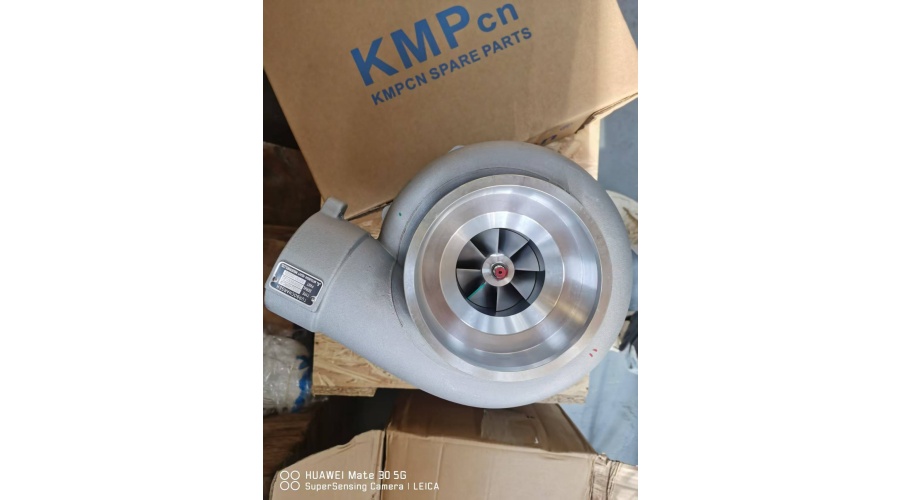
1. Working Principle of the 49181-05400 Turbocharger
At its core, the 49181-05400 turbocharger assy is an exhaust-driven air compressor. It harnesses waste energy from the engine’s exhaust gases to compress intake air, forcing more oxygen into the combustion chambers. Here’s the step-by-step thermodynamic cycle:
Exhaust Gas Inflow: Hot, high-velocity exhaust gases from the Mitsubishi S16R2-MPTK’s six cylinders enter the turbine housing. The gas stream strikes the turbine wheel (impeller) mounted on a common shaft.
Turbine Spool-Up: The kinetic and thermal energy of the exhaust causes the turbine wheel to rotate at speeds exceeding 100,000 RPM—sometimes up to 150,000 RPM under full load.
Compressor Action: The same shaft drives the compressor wheel (located on the fresh-air side). As the compressor spins, it draws in ambient air through the air filter, accelerates it outward via centrifugal force, and compresses it into a smaller volume.
Charge Air Cooling: The compressed hot air then passes through an aftercooler (intercooler) to reduce its temperature, increasing density before it enters the engine’s intake manifold.
Boosted Combustion: Denser, oxygen-rich air allows for more fuel to be burned efficiently per cycle, resulting in a significant increase in power output—typically 30–50% more than a naturally aspirated engine of the same displacement.
The 49181-05400 is designed with a wastegate (or variable geometry, depending on variant) to regulate boost pressure, preventing over-boost at high RPMs and ensuring linear response across the S16R2-MPTK’s operating range.
2. Core Components of the 49181-05400 Assy
Every part of this turbocharger is precision-machined to withstand extreme thermal and mechanical stresses. The main building blocks include:
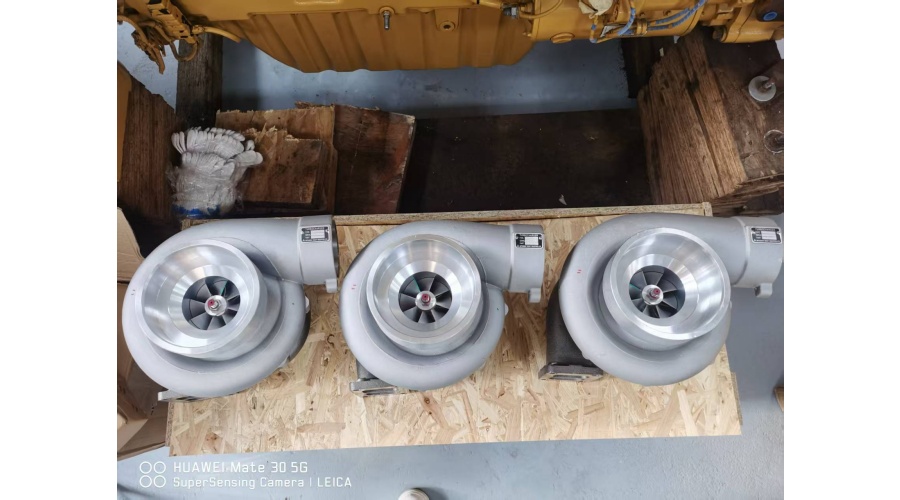
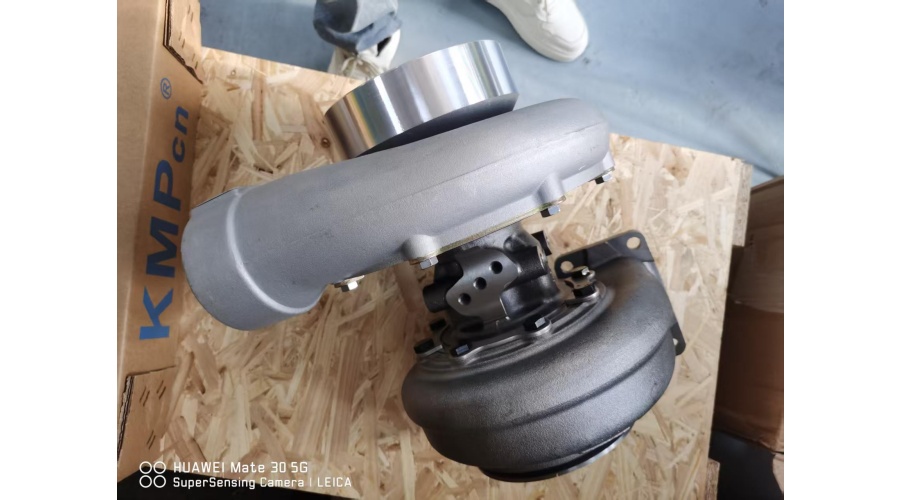
Turbine Housing (Volute): Cast from high-nickel ductile iron, it directs exhaust gases efficiently onto the turbine blades. It features a divided (twin-entry) design on many S16R2 applications to reduce pulse interference between cylinders.
Turbine Wheel: Investment-cast from Inconel or similar superalloy, with aerodynamically curved blades to extract maximum energy from exhaust pulsations.
Center Housing (Bearing Housing): Contains the floating journal bearings and thrust bearing system. It is water-cooled (on marine versions) to manage heat soak and is the structural backbone connecting turbine and compressor sides.
Compressor Housing: Made of aluminum alloy for light weight, with a volute shape that optimally converts velocity into pressure. It integrates a mounting flange for the air inlet duct.
Compressor Wheel (Impeller): Precision-forged aluminum, with backward-curved blades for high efficiency and wide surge margin.
Shaft & Bearing System: A single high-strength steel shaft supported by fully floating journal bearings (oil film) and a thrust bearing that controls axial movement. This assembly is dynamically balanced as a unit.
Seal Rings (Piston Rings): Located on both ends of the shaft to prevent oil leakage into the turbine or compressor housings, while allowing a small amount of controlled oil flow for lubrication.
Actuator (if wastegated): A pneumatic or electronic actuator that opens the wastegate valve to bypass excess exhaust gas, maintaining boost setpoint.
3. Major Advantages of the 49181-05400 on Mitsubishi S16R2-MPTK
Why does this specific turbocharger outperform generic aftermarket alternatives? Here are the strategic benefits:
Optimized A/R Ratio: The turbine housing’s area-to-radius (A/R) is precisely matched to the S16R2-MPTK’s displacement (16.2 liters) and rated speed (1800–2000 RPM for 50/60 Hz). This yields rapid spool-up and minimal turbo lag, critical for maneuverability in marine applications.
High Pressure Ratio Capability: With a compressor map designed for 3.0–3.5 bar absolute pressure, it supports the engine’s high BMEP (brake mean effective pressure) without surging—even at low RPM.
Fuel Economy Improvement: By improving volumetric efficiency by 15–20%, the engine produces the same power with less fuel injection, reducing specific fuel consumption (SFC) by 5–8%.
Lower Exhaust Emissions: Better combustion completeness cuts particulate matter and NOx formation, helping vessels meet IMO Tier II/III regulations with minimal EGR or SCR aftertreatment.
Durability in Saltwater Environments: The housing coatings and stainless steel hardware resist corrosion, extending service intervals in tropical marine climates.
Plug-and-Play Fitment: As an OEM-spec assembly (49181-05400), it matches all mounting flanges, oil feed/drain ports, and coolant connections without modifications—saving installation time and avoiding misalignment risks.
4. Common Faults and Warning Signs
Even the most robust turbocharger can suffer from operational neglect. For the 49181-05400, watch for these failure modes:
Oil Leakage (Blue Smoke): Worn piston ring seals or a clogged oil drain line can push oil into the compressor/turbine, causing blue exhaust smoke and carbon buildup on blades. Often accompanied by rising oil consumption.
Bearing Wear (Whining Noise): Contaminated or low oil pressure leads to scoring of journal bearings. A high-pitched whine or metallic scraping sound during acceleration signals imminent shaft seizure.
Compressor Surge (Chuffing): When the engine cannot accept the airflow (e.g., clogged air filter or sudden load dump), the compressor experiences reverse flow—audible as repetitive "chuffing" and causing cyclic fatigue on blades.
Turbine Cracking: Thermal fatigue from rapid cooldown (e.g., shutting down without idle cooldown) can crack the turbine housing, resulting in exhaust gas bypass and boost loss. Visible soot traces around the housing joint indicate leakage.
Carbon Deposits on VNT/Wastegate Mechanism: If equipped with variable nozzle vanes, sticky carbon restricts vane movement, leading to overboost or underboost and triggering engine derating.
Boost Pressure Deviations: Erratic boost readings (too high or too low) point to a faulty actuator, boost sensor, or wastegate diaphragm.
Early detection is key: Regularly log boost pressure, exhaust temperature, and oil pressure. Any sudden change from baseline warrants a thorough inspection.
5. Usage and Maintenance Best Practices
To maximize the service life of your 49181-05400 turbocharger assy (often exceeding 15,000 hours), follow these proven guidelines:
A. Pre-Start Checks
Verify engine oil level and quality—use only API CF-4 or higher, with viscosity per Mitsubishi’s specs (typically SAE 40).
Ensure the air filter is clean and the intake piping is free of obstructions. A differential pressure gauge across the filter is recommended.
Check the cooling water circuit (if water-cooled) for proper flow and no air locks.
B. Startup Procedure
Never race the engine immediately after cold start. Allow oil pressure to build (3–5 seconds) and let the turbocharger idle for at least 2–3 minutes to distribute warm oil to bearings.
Gradually increase load to operating point; avoid snap throttle changes.
C. Operating Monitoring
Maintain boost pressure within the engine manufacturer’s chart.
Watch exhaust gas temperature (EGT) before the turbine—do not exceed 650°C (continuous) or 720°C (peak) for extended periods.
Oil inlet pressure should be between 2.5–4.5 bar at rated speed; oil outlet temperature below 120°C.
D. Shutdown Protocol
Idle the engine for 3–5 minutes before shutdown to allow turbine wheel and housing to cool gradually. This prevents coking of oil in the bearing housing and thermal shock to castings.
E. Scheduled Maintenance
Every 500 hours: Inspect air filter and clean/replace; check for oil leaks around the center housing.
Every 2000 hours: Perform a visual end-play and radial-play check on the shaft (using a dial gauge). Axial play should be <0.15 mm; radial <0.3 mm.
Every 4000 hours: Remove the turbocharger and have it professionally cleaned and calibrated—including balancing of the rotating group.
Oil and filter changes: Follow engine OEM intervals (typically 1000–1500 hours), but shorten to 750 hours in dusty or heavy-load operations.
F. Common Mistakes to Avoid
Using non-genuine gaskets or O-rings that can distort and cause oil starvation.
Over-tightening the oil drain tube, which may restrict flow.
Ignoring a slight vibration—it often indicates imbalance from blade damage or foreign object impact.
Conclusion
The 49181-05400 turbocharger assy is not just a spare part—it’s a performance multiplier for the Mitsubishi S16R2-MPTK engine. By understanding its thermodynamic brilliance, respecting its precision components, and adhering to disciplined maintenance, you can unlock years of dependable power, lower fuel bills, and cleaner operation.
When replacement time comes, always source the genuine 49181-05400 assembly from authorized distributors. Counterfeit units may seem cheaper, but they lack the metallurgy, balance, and calibration that Mitsubishi’s engineering demands—risking catastrophic engine failure.
Treat your turbocharger well, and it will return the favor with relentless thrust, voyage after voyage.