



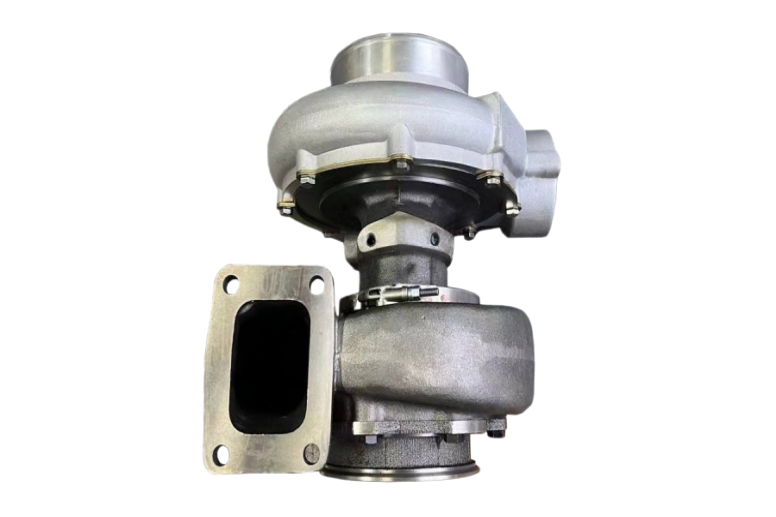
Mitsubishi Heavy Industries S16R2 Turbocharger Parameter Information Guide
Turbocharger for Mitsubishi S16R2-PTA / S16R-PTA Generator Diesel Engine (49182-04902) – High-Power Forced Induction
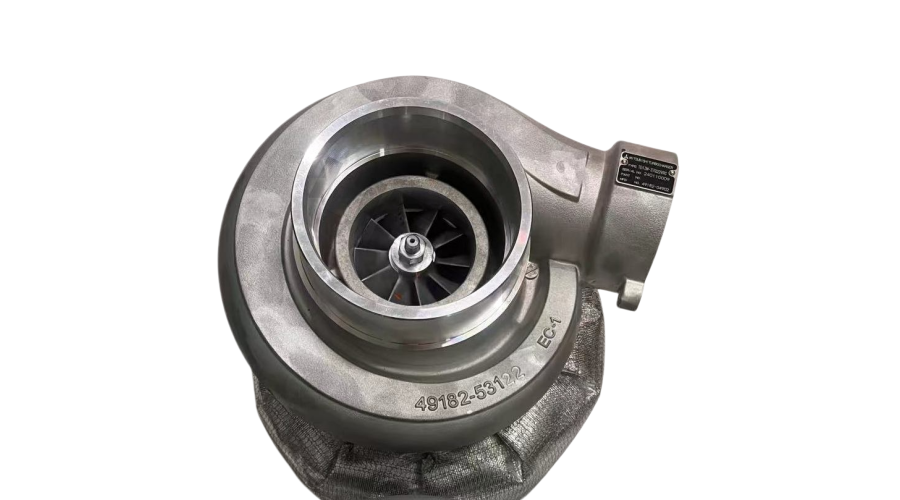
Robust Structural Features and Performance Advantages
The turbocharger with part number 49182-04902 is a heavy-duty forced induction unit engineered specifically for Mitsubishi Heavy Industries S16R-PTA and S16R2-PTA series diesel engines. These engines are V16 configurations widely used in prime and standby generator sets, marine propulsion, and industrial power applications. The turbocharger features a dual-entry turbine housing cast from high-nickel ductile iron capable of withstanding exhaust gas inlet temperatures exceeding 750°C (1380°F) under continuous full-load operation.
A key structural advantage is the water-cooled bearing housing, which circulates engine coolant around the bearing system to maintain optimal operating temperatures and extend service life. This cooling design is critical for generator applications where the turbocharger operates at sustained high loads for extended periods, often thousands of hours between shutdowns. The bearing system utilizes floating rings with high-pressure oil film damping, providing exceptional vibration resistance and stability even when the generator is subjected to sudden load changes.
The compressor housing is manufactured from high-strength aluminum alloy and features a large inlet diameter matched to the S16R engine’s air consumption requirements. The compressor wheel is a billet-machined, high-flow design with extended tip technology, enabling high pressure ratios while maintaining excellent surge margin. The turbine wheel is cast from Inconel® or similar nickel-based superalloy, ensuring creep resistance and thermal fatigue strength. The turbocharger incorporates a wastegate valve or, in some configurations, a bypass system calibrated to maintain stable boost pressure across the engine’s operating range, protecting the engine from overboost while ensuring consistent generator output.
All rotating components are dynamically balanced to ISO 1940 Grade G2.5 or better, guaranteeing smooth, vibration-free operation. The 49182‑04902 turbocharger is available as both new OEM-spec units and fully remanufactured assemblies from Rsolid Engine Parts, with every unit pressure-tested and flow-calibrated before shipment.
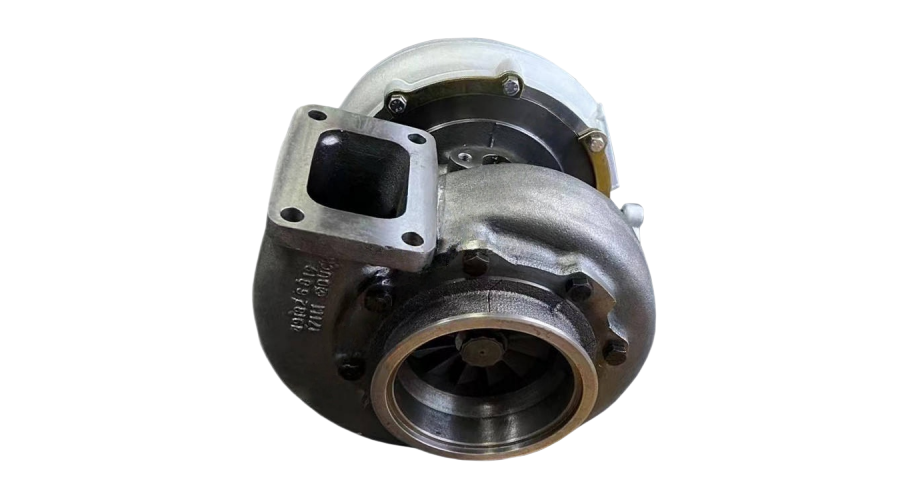
Core Working Principle of the 49182-04902 Turbocharger
The 49182‑04902 turbocharger operates on the principle of exhaust gas energy recovery, enabling the S16R2‑PTA engine to achieve high power density while meeting stringent emission standards. As the V16 diesel engine burns fuel, exhaust gases exit each cylinder bank and are directed into the turbocharger’s twin-entry turbine housing. The pulses from alternating cylinder firing sequences are maintained separately to improve turbine efficiency—a feature particularly important for large V-configuration engines.
The high-velocity, high-temperature exhaust gases strike the turbine wheel blades, causing the wheel to rotate at speeds that can reach 30,000 to 60,000 RPM depending on engine load. The turbine wheel is mounted on the same shaft as the compressor wheel, so as the turbine spins, the compressor rotates identically. The compressor draws in ambient air through a heavy-duty air filter, and the centrifugal action of the compressor wheel accelerates the air outward, compressing it within the compressor housing.
This compressed air, now at a pressure of up to 2.5 to 3.0 bar (36–43 psi) above atmospheric, is then passed through an aftercooler (charge air cooler) before entering the engine’s intake manifold. The aftercooler reduces the air temperature, increasing its density and allowing even more oxygen to be packed into each cylinder. The result is a dramatic increase in volumetric efficiency, enabling the S16R engine to burn more fuel per cycle and produce significantly higher power output compared to naturally aspirated configurations.
The turbocharger’s wastegate or bypass valve plays a crucial role in generator applications. When the generator is operating at constant speed (typically 1500 or 1800 RPM for 50/60 Hz power), the wastegate modulates to maintain steady boost pressure despite variations in electrical load. This precise control ensures stable voltage and frequency output, which is critical for sensitive electronic equipment and grid synchronization.
Primary Application Equipment
The 49182-04902 turbocharger is specifically designed for Mitsubishi Heavy Industries S16R series diesel engines, including the S16R-PTA and S16R2-PTA models. These engines are V16, four-stroke, water-cooled, turbocharged and aftercooled units with displacements ranging from approximately 65 to 80 liters, producing between 800 kW and 1,600 kW (1,070 to 2,150 horsepower) depending on configuration.
Primary applications include:
Prime and Standby Generator Sets – Used in hospitals, data centers, manufacturing plants, commercial buildings, and telecommunications facilities as reliable backup or continuous power sources.
Marine Auxiliary Generators – Installed on large vessels such as container ships, tankers, cruise ships, and offshore supply vessels to provide onboard electrical power.
Marine Propulsion – In smaller vessels, twin S16R engines with these turbochargers serve as main propulsion units.
Industrial Power Units – Supplying mechanical power for pumps, compressors, drilling rigs, and mining equipment.
Railway Locomotives – Some heavy-haul diesel-electric locomotives utilize derated S16R engines with this turbocharger.
Cogeneration (CHP) Systems – Recovering waste heat for district heating or industrial processes.
Equipment manufacturers that have integrated S16R series engines include Mitsubishi Generator sets (MGS), Kobelco, Kawasaki, and various marine repower specialists. When replacing the turbocharger, always verify the engine serial number and turbocharger part number to ensure correct fitment. The 49182-04902 may also be cross-referenced with OEM numbers such as ME075382, 49182-04900, or 49182-04901 depending on revision.
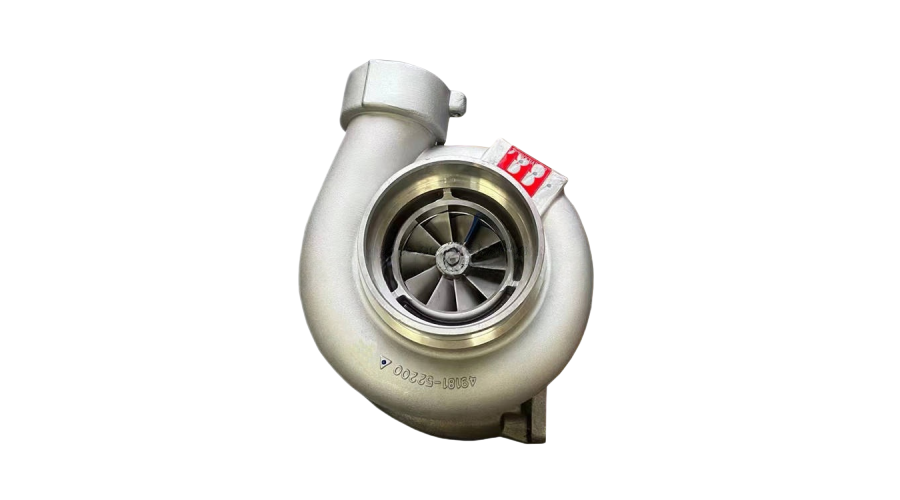
Common Failure Symptoms and Repair Replacement Guidelines
Loss of Generator Output Power – A failing turbocharger on a generator set typically manifests as an inability to reach rated kW output. The generator may start and run at no load, but when electrical load is applied, the engine struggles, voltage drops, and the generator may trip offline. This is caused by insufficient boost pressure, leading to incomplete combustion and reduced torque.
Excessive Black Smoke Under Load – Black exhaust smoke is the most visible symptom of turbocharger problems on a diesel generator. When the turbo cannot supply enough air, the fuel-to-air ratio becomes too rich, resulting in black, sooty smoke. This condition also leads to rapid carbon buildup in the exhaust system and can foul the generator’s emission control equipment.
High Exhaust Gas Temperature (EGT) – Modern generators are equipped with exhaust temperature sensors. Elevated EGT on one bank or across all cylinders indicates that the turbocharger is not moving enough air. Prolonged operation with high EGT will damage the turbine wheel, exhaust valves, pistons, and ultimately the engine block.
Oil Leakage and Blue Smoke – Blue or gray exhaust smoke indicates that engine oil is entering the intake or exhaust system. Oil leakage past the turbine seal results in oil being burned in the exhaust, while compressor seal leakage sends oil into the charge air cooler and intake manifold. In generator applications, oil accumulation in the aftercooler is a fire hazard and must be addressed immediately.
Unusual Noises (Whining, Scraping, or Squealing) – A healthy turbocharger on a generator produces a steady, high-pitched whistle at full load. Bearing wear causes a change in pitch, often a low-frequency whine or growl. Scraping or grinding noises indicate that the turbine or compressor wheel is contacting the housing, usually the result of bearing failure or foreign object damage.
Replacement and Repair Guidelines – Replacing the 49182-04902 turbocharger on an S16R generator engine requires strict adherence to procedures. First, isolate the generator electrically, lock out/tag out, and allow the engine to cool completely. Remove the turbocharger guard, disconnect the exhaust bellows, air intake ducting, oil supply and return lines, and coolant lines (if water-cooled). Thoroughly clean all gasket surfaces and inspect the oil feed line for restrictions or carbon deposits—replace if necessary. Install new gaskets and O-rings, and pre-lube the turbocharger bearing housing with clean engine oil before mounting. Tighten mounting bolts to the specified torque in a cross pattern. After installation, crank the engine with the fuel shut off until oil pressure registers, then start and run at idle for 2-3 minutes to establish lubrication. Gradually increase to full load while monitoring boost pressure, exhaust temperatures, and for any unusual noises. For optimum reliability, Rsolid Engine Parts recommends replacing the air filter, oil filter, and engine oil at the same time as the turbocharger.
Rsolid Engine Parts – Your Trusted Turbocharger Supplier for Mitsubishi Generators
Rsolid Engine Parts is a leading global supplier of high-performance turbochargers, fuel injectors, and engine components for industrial diesel engines. Our 49182-04902 turbochargers for Mitsubishi S16R2-PTA and S16R-PTA generator engines are manufactured to meet or exceed OEM specifications, ensuring reliable power generation even under the most demanding conditions.
We offer both new and fully remanufactured units, each 100% tested on dynamic balancing machines and flow benches. Our inventory includes complete turbochargers as well as repair kits and individual components for field service. With fast worldwide shipping, competitive pricing, and a dedicated technical support team, Rsolid Engine Parts minimizes your generator downtime and keeps your operations running. Visit our website at www.rinjector.com or contact us via WhatsApp at +8615975376778 for expert assistance, quotes, and after-sales support. Choose Rsolid for quality, reliability, and peace of mind.