
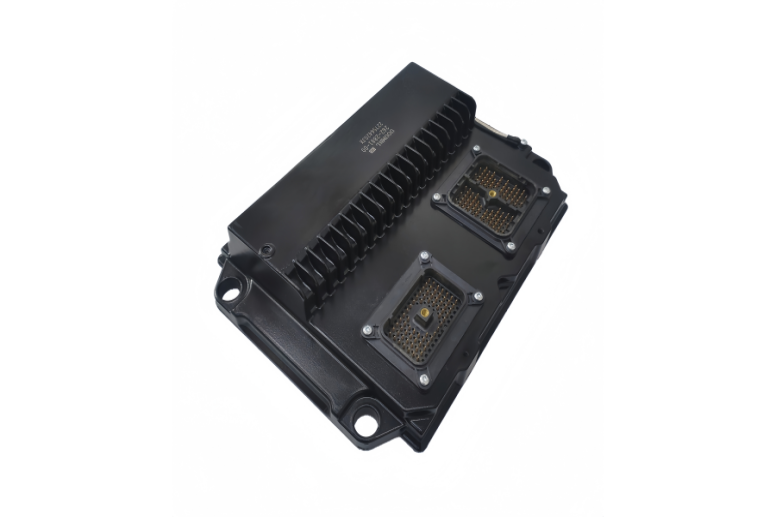
Talking about Common Malfunctions and Solutions of Electronic Control Units in Engines
Here is a detailed overview of common Electronic Control Unit (ECU) malfunctions in automotive engines and their solutions, structured for clarity.
Understanding the Engine ECU
The Engine Control Unit (ECU) or Engine Control Module (ECM) is the "brain" of the modern engine. It processes data from a network of sensors and controls actuators to optimize performance, emissions, and fuel economy. Malfunctions can range from simple electrical issues to complex software problems.
Common Malfunctions and Their Symptoms
1. Electrical and Connection Issues
These are the most frequent causes of ECU-related problems.
Loose, Corroded, or Damaged Connectors: Vibration, moisture, and salt can degrade electrical connections.
Symptoms: Intermittent stalling, random misfires, "limp-home mode" activations, or a complete no-start. Fault codes may come and go.
Poor Ground Connections: The ECU relies on clean, stable ground points. A bad ground can cause erratic voltage references.
Symptoms: Unexplained sensor failures, unstable idle, flickering dash lights, or bizarre fault codes.
Voltage Spikes/Short Circuits: Can be caused by a failing alternator, jump-starting incorrectly, or a short in a solenoid or injector circuit.
Symptoms: Immediate ECU failure (bricked), blown internal components (like driver transistors for fuel injectors), or corrupted memory.
2. Internal ECU Failures
Failed Power Supply or Regulator: The ECU has an internal circuit to provide stable 5V/12V to sensors and itself.
Symptoms: No communication with a scan tool, no power to sensors, or a complete engine shutdown.
Failed Driver Components: These are transistors that switch high-current devices (fuel injectors, ignition coils, relay controls).
Symptoms: Misfire on a specific cylinder (if one injector driver fails), all coils/injectors dead (if the driver bank fails), or a fuel pump that won't run.
Corrupted/Corroded Circuit Board: Due to water intrusion (e.g., from a leaking windshield) or condensation.
Symptoms: Intermittent faults, unexplained behavior, or permanent failure.
3. Software and Calibration Issues
Corrupted Software Memory: From voltage spikes or faulty flash attempts.
Symptoms: Engine won't start, severe driveability issues, or "checksum" error codes.
Outdated or Incorrect Calibration: Aftermarket modifications or a bad software update.
Symptoms: Poor performance, knocking, excessive emissions, or reduced fuel economy.
4. Sensor Input Failures (That Can "Confuse" the ECU)
While not an ECU failure itself, a faulty sensor can cause the ECU to make disastrous control decisions.
Critical Sensors: Crankshaft Position Sensor (CKP), Camshaft Position Sensor (CMP), Mass Air Flow (MAF) sensor.
Symptoms: A failed CKP/CMP typically causes a no-start. A faulty MAF can cause poor fueling, stalling, or rich/lean codes.
Diagnostic Approach and Solutions
⚠️ Important: Always start with basic diagnostics before suspecting the ECU. It is often the last component to blame.
Step 1: Basic Checks & Scan for Diagnostic Trouble Codes (DTCs)
Use an OBD-II scanner to read all stored codes (both generic and manufacturer-specific). Codes point to a circuit or function, not directly to a bad ECU.
Example: Code P0301 (Cylinder 1 Misfire) is more likely a bad spark plug, coil, or injector than the ECU.
Step 2: Visual and Electrical Inspection
Check Connectors: Inspect the ECU harness connector(s) for corrosion, bent pins, or loose locks.
Check Grounds: Locate and clean the main engine and ECU ground points.
Check Power & Voltage:
Verify battery voltage (key-on) at the ECU power supply pins.
Check for a stable 5V reference voltage from the ECU to sensors.
Step 3: Signal Verification
Use a multimeter or oscilloscope to check signals from key sensors (CKP, CMP) and actuator outputs at the ECU connector. This determines if a problem is coming to or coming from the ECU.
Step 4: Pinpoint Testing
If a driver circuit is suspected (e.g., for fuel injector #1), test by swapping the component with another cylinder (e.g., swap injector 1 and 2). If the misfire moves, the component is bad. If it stays on cylinder #1, the wiring or ECU driver is the issue.
Step 5: Solutions Based on Findings
| Malfunction | Likely Solution |
|---|---|
| Corroded Connectors | Clean contacts, apply dielectric grease, repair/replace connector housings. |
| Bad Ground/Power | Clean and secure ground connections. Repair wiring or relays in power circuits. |
| Failed Internal Driver | ECU Repair/Reflashing: Specialized shops can often replace individual components (capacitors, transistors) and reflash corrupted software. This is cost-effective. |
| Water-Damaged Circuit Board | ECU Repair: If corrosion is minor, a specialist may clean and repair it. Severe damage requires replacement. |
| Completely Dead ECU | ECU Replacement: Requires a direct OEM part or a properly programmed/cloned unit. |
| Incorrect/Corrupted Software | ECU Reflashing/Reprogramming: Requires a dealer-level or advanced aftermarket tool to reload the correct firmware/maps. |
Critical Considerations for Replacement/Repair
Programming/Immobilizer Matching: Modern ECUs are VIN-specific and paired with the immobilizer system (transponder key, instrument cluster). A new ECU must be programmed to the vehicle, which often requires dealer or specialist equipment.
Cloning: A common solution is to "clone" the data from the old, damaged ECU onto a replacement unit, preserving the VIN and immobilizer data. This requires specialized tools.
Used/Aftermarket ECUs: Can be a good option but must be compatible and will almost always require programming/cloning.
Prevention
Secure Battery Connections: Always disconnect the battery before any electrical work and connect it properly to avoid spikes.
Protect from Water: Ensure ECU housing seals are intact, especially if located in the engine bay or under the windshield cowl.
Use Quality Components: When replacing sensors or actuators linked to the ECU.