


How to Choose the Right Fuel Injector for Your Diesel Engine: A Complete Buyer’s Guide
Choosing the correct fuel injector for your diesel engine isn’t just about matching part numbers—it’s about optimizing performance, fuel efficiency, and engine longevity. With dozens of options on the market, from OEM replacements to high-performance upgrades, making the wrong choice can lead to poor combustion, excessive smoke, reduced power, and even catastrophic engine failure.
In this guide, we’ll walk you through every critical factor—from injector types and flow rates to spray patterns and compatibility—so you can make an informed decision that keeps your diesel running clean and strong for years.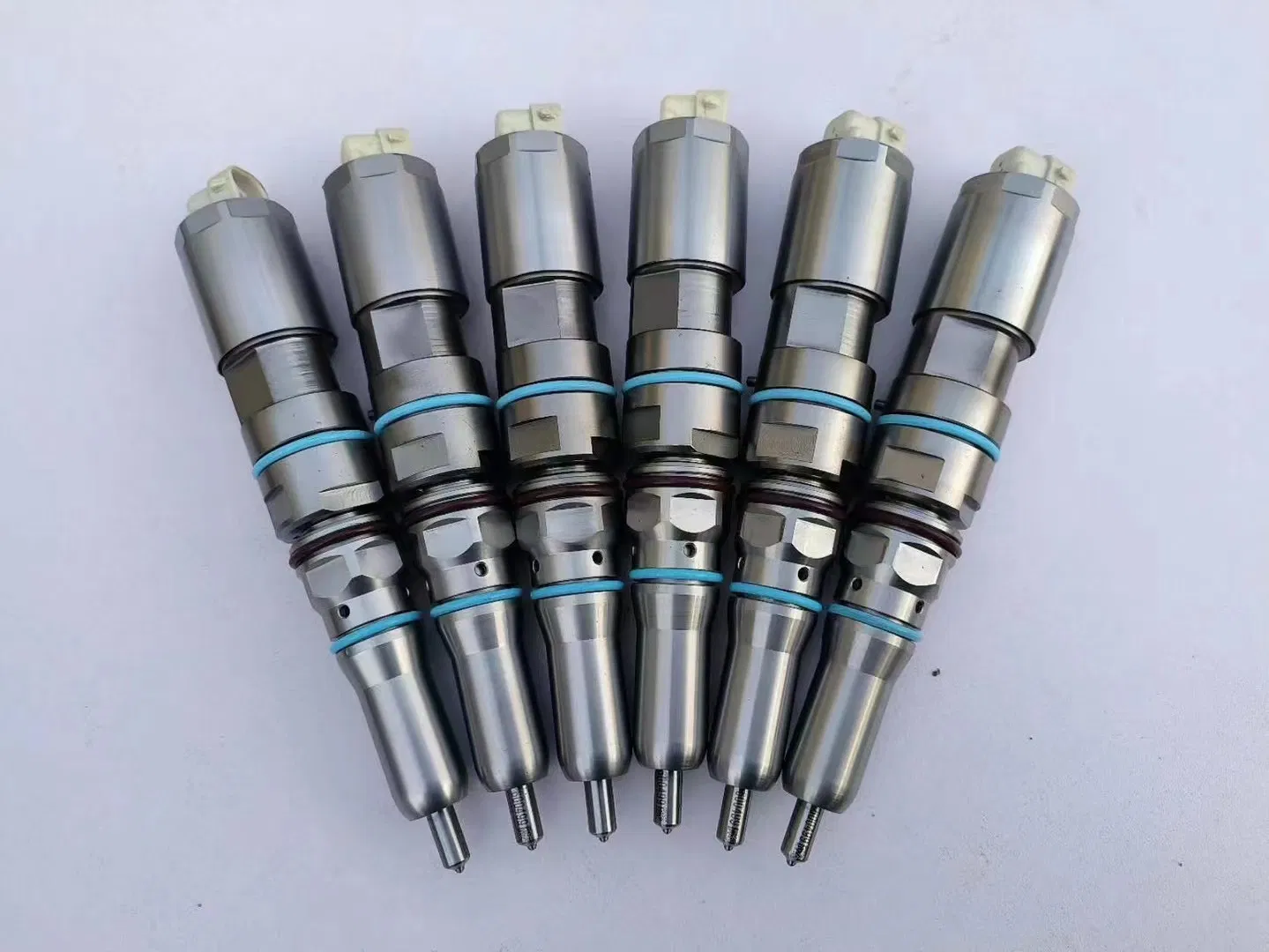
Why Fuel Injector Selection Matters More Than You Think
Diesel injectors are the heart of your fuel system. They meter, atomize, and deliver fuel into the combustion chamber at precise pressures—often exceeding 2,000 bar in modern common-rail systems. Even a 5% deviation in flow or spray angle can cause:
Loss of power (up to 15–20%)
Increased fuel consumption (10–15% higher)
Excessive black smoke (incomplete combustion)
Cylinder washing (fuel diluting engine oil)
Premature wear of pistons, rings, and valves
Conversely, the right injector restores factory performance, reduces emissions, and can even improve throttle response. Whether you’re rebuilding a vintage mechanical engine or tuning a modern turbo-diesel, the selection process follows a logical framework.
Step 1: Identify Your Engine’s Injector Type
Diesel injectors fall into three main categories. Knowing which one your engine uses is non-negotiable.
Mechanical (Unit Injectors)
Found in older engines (pre-2000s) and many heavy-duty trucks. Fuel is pressurized mechanically via camshaft lobes. Examples: Detroit Diesel 2-stroke, Caterpillar 3406E, early Cummins N14.
Key specs: Plunger diameter, stroke, and delivery valve timing.
Common-Rail Injectors
Modern engines (2000+) use a high-pressure rail that feeds all injectors. Each injector is electronically controlled via a solenoid or piezoelectric actuator. Examples: Cummins ISX, Duramax LB7/LML, Power Stroke 6.7L, most European diesels.
Key specs: Rail pressure rating, nozzle hole count, and response time (microseconds).
Pump-Line-Nozzle (PLN)
Older systems with individual inline pumps and high-pressure lines to each nozzle. Common in agricultural and marine engines.
Key specs: Injection timing, line length, and nozzle opening pressure.
Action: Check your engine’s service manual or VIN plate. If unsure, note the engine model, year, and ECU calibration—then consult a reputable injector supplier.
Step 2: Match Flow Rate (CC/min) to Your Horsepower Goal
Flow rate determines how much fuel is delivered per injection event. It’s measured in cubic centimeters per minute (cc/min) at a given pressure and duty cycle.
Stock replacement: Use OEM flow specs (e.g., 120 cc/min for a 200 hp 4-cylinder).
Moderate upgrade (+10–20% power): Increase flow by 15–25%, but ensure your ECU can compensate.
High-performance (+50% or more): You’ll need larger nozzles (e.g., 200+ cc/min) along with upgraded turbo, intercooler, and fuel pump.
Critical warning: Oversized injectors without proper tuning cause “overfueling”—black smoke, high EGTs, and melted pistons. Always match flow to your air/fuel ratio and boost levels.
Step 3: Evaluate Spray Pattern and Cone Angle
The spray pattern—number of nozzle holes, hole diameter, and spray angle—directly affects combustion efficiency.
Fewer holes (4–5): Better for lower RPM, high-torque applications; produces coarser droplets.
More holes (6–9): Finer atomization for cleaner burn, ideal for high-RPM and emission-controlled engines.
Cone angle must match piston bowl geometry. An incorrect angle will wet the cylinder walls instead of targeting the bowl center.
Pro tip: If you’ve changed pistons or compression ratio, consult the injector manufacturer’s application chart—don’t guess.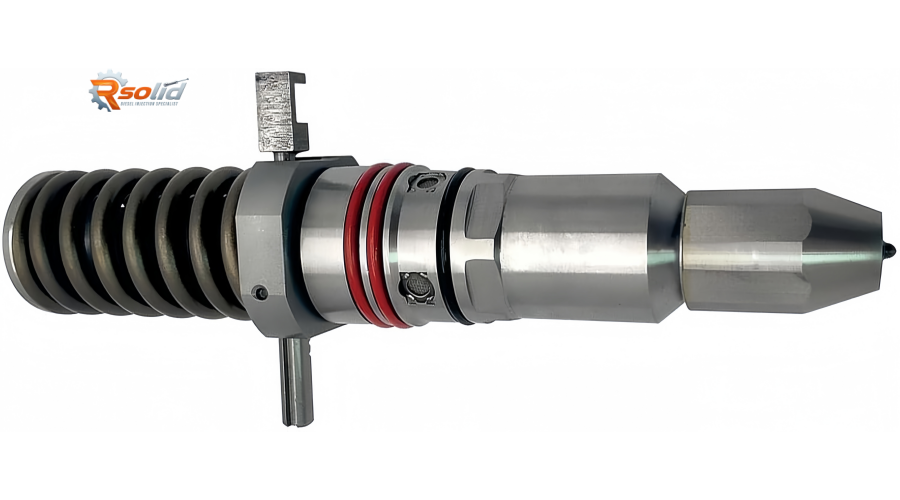
Step 4: Check Opening Pressure (Pop Pressure)
For mechanical and PLN injectors, opening pressure (the pressure at which the nozzle lifts) is adjustable. Common settings range from 200 to 350 bar.
Higher opening pressure → finer atomization → better low-end torque, but harder on the pump.
Lower opening pressure → earlier injection → more noise and smoke.
For common-rail systems, opening pressure is controlled by the ECU, but the nozzle’s hydraulic flow (measured at a standard pressure, e.g., 100 bar) still matters. Always use the manufacturer’s recommended pop pressure for your cam profile and RPM range.
Step 5: Consider Solenoid vs. Piezo Injectors (Common-Rail Only)
Solenoid injectors are robust, cheaper, and easier to service. They have slower response times (~200 µs) but are reliable for most trucks and tractors.
Piezoelectric injectors react in ~100 µs, allowing multiple pilot injections per cycle. They reduce noise, smoke, and fuel consumption—but are more expensive and sensitive to fuel cleanliness.
Choose piezo if: You drive a late-model passenger diesel or a performance vehicle where refinement and MPG matter.
Choose solenoid if: You need durability in off-road, marine, or extreme-duty applications.
Step 6: Verify Electrical Compatibility (for Electronic Injectors)
Even if an injector physically fits, the electrical parameters must match your ECU’s driver:
Resistance (ohms): High-impedance (12–20 Ω) vs. low-impedance (2–5 Ω). Mismatch burns out drivers.
Inductance and peak-hold current—critical for precise opening and closing times.
Connector type—2-pin, 4-pin, or 6-pin; orientation and locking mechanism.
Always cross-reference the OEM part number and, if possible, the calibration code (e.g., Bosch IMA code) printed on the injector body.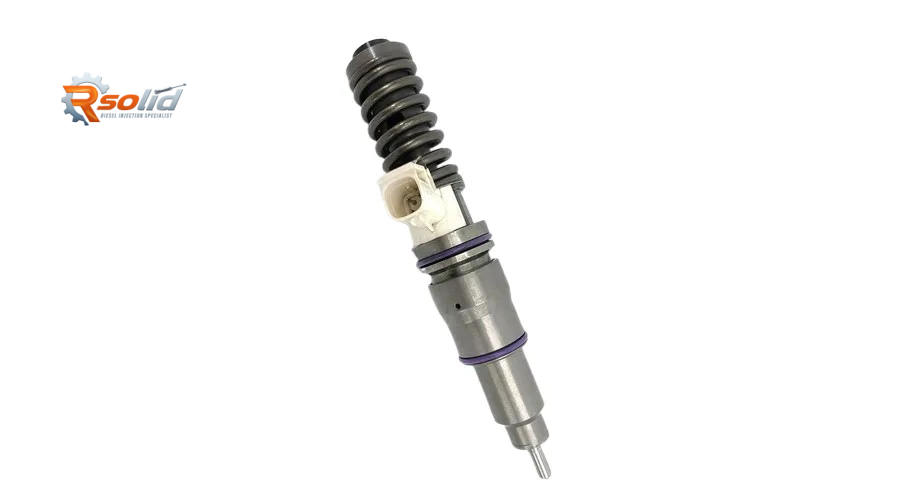
Step 7: Choose Between OEM, Remanufactured, and Aftermarket
| Option | Pros | Cons |
|---|---|---|
| OEM New | Guaranteed fit, factory calibration, longest life | Highest cost |
| OEM Reman | 40–60% cheaper, tested to factory specs | Quality varies by reman facility—choose ISO-certified |
| Aftermarket (performance) | Upgraded flow, custom spray patterns | Requires tuning; may void warranty; quality inconsistent |
Recommendation: For daily drivers and work trucks, stick with OEM or premium reman from a supplier that provides flow test reports. For racing or towing-heavy use, aftermarket upgrades from established brands (e.g., Bosch Motorsport, Stanadyne, or Denso) are viable—but budget for professional dyno tuning.
Step 8: Don’t Forget the Supporting Systems
An injector is only as good as the fuel it receives. Before installation:
Replace the fuel filter (2-micron recommended).
Flush the rail and lines to remove debris.
Check lift pump pressure and return flow.
Update your ECU tune to match the new injector’s flow and timing.
Skipping these steps can ruin new injectors in under 100 hours.
Step 9: Test Before You Buy—Ask for a Flow Report
Reputable suppliers provide individual flow test certificates showing:
Static flow at rated pressure
Dynamic flow at multiple pulse widths
Return leakage (internal wear indicator)
Spray visualization (pattern and symmetry)
Compare these numbers against your engine’s baseline. A matched set (all injectors within ±2% flow) ensures smooth idle and balanced EGTs across cylinders.
Step 10: Budget for Professional Installation and Calibration
While some DIYers swap injectors, common-rail systems require special tools:
Pullers for stuck injectors
Torque wrenches with adapter for hold-down bolts
Diagnostic scanner to perform injector coding (enter IQA codes into ECU)
Leak-off test kit to verify post-installation
If you don’t have these, factor in 2–4 hours of shop labor. It’s cheaper than replacing a scored cylinder.
Final Checklist: Your Decision Flowchart
Engine model & year → determine injector type (mechanical, common-rail, PLN).
Current power & target power → calculate required flow (cc/min).
Piston bowl geometry → select spray angle and hole count.
ECU type → choose solenoid vs. piezo, check resistance and connector.
Budget → OEM new, reman, or performance aftermarket.
Supporting mods → ensure fuel pump, filter, and tune are ready.
Request flow test → verify matched set.
Install with correct torque and coding → then perform a leak-off test.
Common Mistakes to Avoid
Buying based on price alone – a $50 injector often costs $500 in repairs.
Ignoring nozzle wear – worn tips cause dribbling, which erodes pistons.
Mixing different nozzle codes – even same part number with different calibration codes affects balance.
Forgetting to reset fuel trims – some ECUs learn old injector behavior; reset adaptations after replacement.
Final Thoughts
Selecting the right diesel injector is a systematic process—not a lucky guess. Start with your engine’s exact specifications, define your performance goals, and always prioritize quality and matched flow over bargain deals. When in doubt, consult a diesel fuel specialist who can interpret flow data and recommend a proven combination.
Remember: The best injector isn’t the most expensive or the highest-flowing—it’s the one that delivers the right amount of fuel, at the right time, in the right pattern, for your specific engine and usage. Invest the time upfront, and your diesel will reward you with miles of reliable, efficient, and powerful service.